

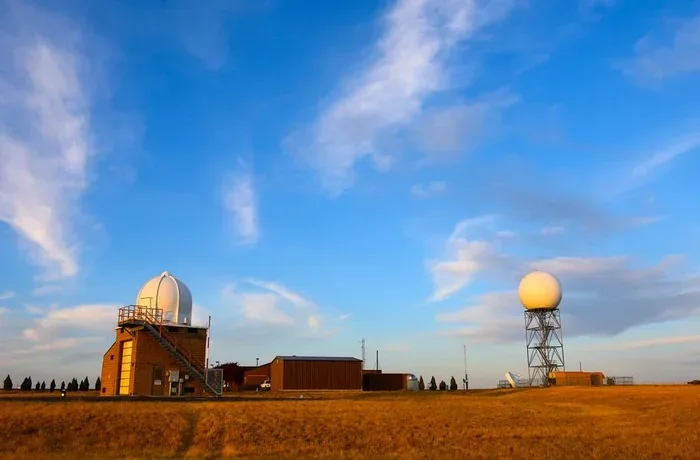
How are computers used in weather forecasting is a fascinating topic that reveals the backbone of modern meteorology. Supercomputers process billions of data points from satellites, radar, and weather stations to run numerical weather prediction models. These powerful machines enable forecasters to predict storms, track hurricanes, and improve forecast accuracy every single day.
Have you ever wondered how meteorologists predict the weather days before it happens? The answer lies in computers. How are computers used in weather forecasting has become one of the most important questions in modern science. Every day, powerful machines process billions of data points to give us the forecasts we rely on.
From simple temperature predictions to tracking massive storms, computers in weather forecasting have completely changed how we understand the atmosphere. These machines run complex weather models that simulate conditions across the globe. Without them, accurate predictions would be nearly impossible.
The journey of weather prediction technology has been remarkable. Early forecasters relied on experience and basic observations. Today, supercomputers handle the heavy lifting, turning raw atmospheric data into detailed forecasts. Let us explore exactly how this works.
Key Takeaways
- Supercomputers drive weather prediction: They process trillions of calculations to simulate atmospheric conditions and generate forecasts.
- Numerical weather prediction models are the core: These mathematical models turn raw atmospheric data into actionable forecasts.
- Storm tracking relies heavily on computers: Real-time data from radar and satellites feeds into models that predict severe weather paths.
- Data assimilation is essential: Blending observations from global networks into a single forecast picture improves accuracy significantly.
- Machine learning is the new frontier: AI and weather algorithms are enhancing traditional forecasting models for faster and more precise results.
- Forecast accuracy has improved dramatically: Seven-day forecasts today are far more reliable than three-day forecasts from decades ago.
- Quantum computing could change everything: Future computational power may revolutionize long-range weather prediction.
📑 Table of Contents
The Role of Supercomputers in Weather Prediction
At the heart of modern forecasting sits the supercomputer. These machines are not like your home laptop. They contain thousands of processors working together to solve massive mathematical equations. A single forecast run can require trillions of calculations.
Supercomputers process data from weather stations, satellites, and ocean buoys around the world. They take this raw information and feed it into numerical weather prediction models. These models then simulate how the atmosphere will behave over the next several days.
The faster the computer, the more detailed the forecast. Modern forecasting technology allows meteorologists to update predictions every few hours. This speed helps communities prepare for sudden changes in conditions.
How Supercomputers Process Atmospheric Data
Atmospheric data comes from many sources. Weather balloons, radar systems, and ground stations all collect measurements. Computers in weather forecasting gather this data and organize it into a three-dimensional grid covering the entire planet.
Each grid point holds information about temperature, humidity, wind speed, and pressure. The supercomputer then calculates how these factors will change over time. This process is called data assimilation, and it forms the foundation of every modern forecast.
Numerical Weather Prediction Models Explained
Numerical weather prediction, or NWP, is the science behind computer-based forecasts. These weather models use mathematical equations to represent physical processes in the atmosphere. Things like heat transfer, moisture movement, and wind patterns are all calculated.
The most widely used models include the Global Forecast System and the European Centre model. Each model has its own strengths. Some focus on short-term accuracy, while others excel at long-range predictions. Forecast accuracy depends heavily on which model forecasters choose.
Running these models requires enormous computational power. A single global forecast can take hours to complete, even on the fastest machines. Despite this, the results are worth the wait.
Understanding Model Output
When a weather simulation finishes, meteorologists study the results carefully. They look at temperature maps, rainfall estimates, and wind forecasts. Sometimes they run the same model multiple times with slight changes. This technique is called an ensemble forecast.
Ensemble forecasts help forecasters understand uncertainty. If most model runs show rain, confidence is high. If results vary widely, the forecast becomes less certain. This approach makes weather prediction technology more reliable over time.
Storm Tracking and Severe Weather Alerts
One of the most critical uses of computers in weather forecasting is storm tracking. Hurricanes, tornadoes, and thunderstorms develop quickly and can be deadly. Computers help forecasters monitor these systems in real time.
Weather radar feeds data directly into forecasting models. Satellites capture images of cloud formations from space. Computers process this information to predict a storm’s path and intensity. This allows authorities to issue timely warnings.
For example, hurricane track predictions have improved dramatically over the past 30 years. Storm tracking computers now predict landfall locations with much greater precision. This gives coastal communities extra hours or even days to prepare.
The Role of Machine Learning in Storm Prediction
Artificial intelligence is now joining the forecasting toolkit. Machine learning algorithms analyze past weather patterns and learn from them. These systems can spot trends that traditional models might miss.
Some weather prediction technology platforms now combine machine learning with traditional NWP. The result is faster processing and sometimes improved accuracy. Researchers continue to explore how AI can make forecasts even better.
Data Collection and Weather Observation Networks
Computers are only as good as the data they receive. That is why weather observation networks are so important. These networks span the entire planet and collect continuous measurements.
Satellites orbit Earth and capture images of cloud cover, sea surface temperatures, and moisture levels. Ground-based stations measure local conditions like temperature and wind. Ocean buoys track water temperature and wave height. All of this information flows into computers for processing.
Data assimilation is the process of blending all these observations into a single coherent picture. Without it, forecast accuracy would drop significantly. Modern meteorology depends on this seamless flow of information.
Improving Forecast Accuracy Over Time
Forecast accuracy has improved enormously thanks to computing power. Fifty years ago, three-day forecasts were unreliable. Today, seven-day forecasts are remarkably accurate. This progress is directly linked to advances in weather prediction technology.
Several factors drive this improvement. Faster supercomputers allow for higher-resolution models. Better weather algorithms capture atmospheric processes more precisely. And expanded observation networks provide richer data for computers to analyze.
Even small improvements matter. A one percent increase in forecast accuracy can save lives and reduce economic losses. Communities that receive accurate warnings can evacuate earlier, protect property, and respond more effectively.
Challenges That Remain
Despite great progress, challenges remain. Weather systems are incredibly complex. Small errors in initial data can grow over time. This is known as the butterfly effect. Computers continue to get faster, but nature still holds surprises.
Long-range forecasts beyond 10 days remain uncertain. Meteorologists work hard to push the boundaries of what is predictable. Every new breakthrough in computational power brings us closer to more reliable long-range outlooks.
The Future of Computers in Weather Forecasting
The future looks bright for computers in weather forecasting. Quantum computing is on the horizon and could revolutionize weather models. These next-generation machines may solve complex equations in minutes instead of hours.
Cloud computing is also making forecasting technology more accessible. Smaller weather services can now access powerful computing resources without owning expensive hardware. This democratization of computational power could improve forecasts worldwide.
As weather prediction technology continues to evolve, we can expect even more precise and timely forecasts. The partnership between human expertise and machine power will only grow stronger.
What This Means for Everyday People
Better forecasts mean better decisions. Farmers can plan planting and harvest dates more confidently. Airlines can route flights around storms. Emergency managers can protect communities with earlier warnings. Computers in weather forecasting ultimately serve all of us.
Next time you check the weather app, remember the incredible journey the data has taken. From satellites in space to supercomputers on the ground, it is a remarkable system working behind the scenes.
The story of how computers are used in weather forecasting is one of constant innovation. From early number-crunching machines to today’s AI-enhanced systems, each advance brings us closer to perfectly accurate predictions. The next time you grab an umbrella before heading out, take a moment to appreciate the incredible computational technology that helped you make that decision.
Frequently Asked Questions
What role do supercomputers play in weather forecasting?
Supercomputers are the backbone of modern forecasting. They process trillions of calculations using atmospheric data from satellites, radar, and weather stations to run numerical weather prediction models that simulate future conditions.
How accurate are computer-based weather forecasts?
Forecast accuracy has improved significantly over the decades. Today, seven-day forecasts are remarkably reliable, thanks to faster supercomputers, better weather algorithms, and expanded global observation networks.
Can computers predict severe weather like hurricanes?
Yes. Computers in weather forecasting track hurricanes in real time using weather radar and satellite data. Storm tracking models predict storm paths and intensity, giving communities valuable time to prepare and evacuate.
What is data assimilation in weather prediction?
Data assimilation is the process of blending observations from weather stations, satellites, and ocean buoys into a single forecast model. This step is essential for creating accurate weather simulations and reliable forecast accuracy.
How is artificial intelligence changing weather forecasting?
Machine learning algorithms are being added to traditional weather models to speed up processing and improve predictions. AI can spot patterns in historical data that conventional numerical weather prediction methods might overlook.
What does the future hold for computers in weather forecasting?
Quantum computing and cloud-based forecasting technology could transform the field. These advances may provide even greater computational power, leading to faster, more detailed, and longer-range weather prediction technology for everyone.